About Me

My photo
I am a 6th grade language arts teacher looking for ways to incorporate digital texts and New Literacies into my classroom. This blog will chronicle my journey and, hopefully, provide insight into what works and what doesn't.

Wednesday, December 3, 2014

#myhashtagwillmakethingshappen….maybe

Over the summer, I wrote a discussion post for a pop culture class that aligned my assigned reading with the comments from this picture.  My husband and I follow Max Joseph, the one on the left. not as a fan of Catfish, the TV Show, but because he is personal friend.  I am always amazed at the number of likes he receives for random pictures, but this post caught my attention.  The hasthag #bringbackourgirls was a social media campaign in response to the kidnapping of Nigerian school girls.  A Facebook page was created (here is a link) and celebrities posted pictures like this one on Instagram to raise awareness.  But, was that all it did? Did the hashtag actually bring back the girls? Today is Day 233. 

I am in no way belittling the efforts of campaigns like this one.  They do raise awareness! I would not have known about the kidnappings if I had not followed Max Joseph on Instagram, a MTV semi-celebrity who cared enough to post a picture with a socially driven hashtag.  But, I must admit, I didn't do much else except Google what the hashtag was all about. As Harlow and Guo also found, "The tools are best for raising awareness and are less able to incite people to participate in offline activism" (Harlow and Guo, 2014, p. 11).  

So how do movements like this one succeed?  They achieve a goal because they create a " citizenry able and willing to communicate with digital tools across differences in a radically interconnected yet divided world" (Hull, 2010, p. 85).  The hashtag is today's equivalent to a report on current events in school.  Our children don't stand up in front of the class with the front page of the newspaper and give a report about things happening in their cities, country or the world.  They are instantly connected to events and responding to everything!   


Our students may not be dedicated to the movements they comment of "like" and that may be the extent of their participation (Harlow and Guo, 2014, p. 4).  But, what activist achieve with social media campaigns is an informed public.  A high school student who sees the #bringbackourgirls hashtag may not become involved in this movement, but may go to college and study global affairs (in some form) to make a difference in the future.  Let's not forget, "our aim is to position youth to envision themselves as social actors with responsibilities toward others and the world" (Hull, 2010, p. 87).  

Currently, my Facebook profile picture is of a cancer awareness wrist band because a friend is battling the disease for the second time.  I know my Facebook picture won't cure her, but I do think it provides a sense of community. For her, she is able to really see that we care about her from near and far.  The same is true for any movement that utilizes social media as a way of disseminating information about their cause: a community has been created of caring people.  Isn't that what our students will need to battle the problems of the future? A way to create pockets of communities that care about what happens to each other?  I believe an informed youth is more powerful and capable of change than the uninformed masses. 


Sunday, November 16, 2014

What Should and Could Be

"Combining our vision of what students "should" do when they're writing with what they could do is incredibly important"  -Hicks, 2013, p. 157.

This week's readings really resonated with me because I have found myself in a grey area that I also believe plagues digital literacy, online texts, and multimodal projects.  Upon completion of my masters degree, I had believed I would upgrade my Georgia teaching certificate.  Currently, my T-4 renewable certificate is in Middle Grades Social Studies (as my undergrad degree is in History), so I knew there would be some hoops as my degree will be in reading.  But, and here is the grey area, the Georgia Professional Standards Commission does not recognize a masters in reading - new and digital literacies focused, as a certifiable field of reading.  This is from their response -

"This particular program is not state-approved and does not lead to certification in Reading or in any other field."  

See? Just like digital literacy, I am stuck in the grey area of the present not embracing the future.  The Common Core "fails to do enough to acknowledge the changing nature of literacy and the Internet as a central text" (Drew, 2012, p. 321). Why wouldn't a program focused on new and digital literacies lead to a reading certification? The Georgia Professional Standards Commission isn't able to answer this question, but here is my best reply. 

Most in education are reactive and not proactive.  We make changes to standards when the current set fails.  Educators "[have] been beleaguered by a number of challenges, including…..increased scrutiny from consortia creating new standards and assessments" (Hicks, 2013, p. 155). But these aren’t new; they are a still based in the same skills just redefined to be “fewer, clearer; higher” (Drew, 2012, p. 321).  They are a reaction to ever widening gap between our students’ potential and academic success.  But without being proactive and writing standards and curriculum that are geared at welding outside school discourse with those used in school, we will continue to produce underprepared students. “Educators cannot continue to ignore online literacy demands or our students may continue to fall further behind in college and career readiness and preparation for a global workplace” (Drew, 2012, p. 328).
Drew (2012), Gura (2014), and Hicks (2013) all present ways to shed light on this grey area.  Drew (2012) highlights what states can to do to include online texts in the Common Core, by adding and editing the 15% allotted for change (Drew, 2012, p. 325).  Gura’s (2014) entire book is comprised of authentic activities that utilize new literacies and multimodal projects to engage and assess our students.  He presents instructional practices “as vehicles by which the goals of the Common Core standards may be met” (Gura, 2014, p. 5).  Finally, Hicks’ (2013) book, Crafting Digital Writing, screams of ways we can teach our students to craft writing in intentional ways “so they can be thoughtful and respectful communicators throughout their lives” not just at school (Hicks, 2013, pp. 177, 155). 

Maybe this isn't a grey area…maybe we are at a tipping point.  Maybe, we, those of us in programs that embrace new and digital literacy, are the lone nuts, and first followers. 


Sunday, November 2, 2014

A Constructed World

You are what you like (Frontline, 2014).  And what you like, and the more you like it, becomes part of the current culture.  This culture provides students with a sense of empowerment where their voices count and no one tells them, “You can’t say that” (Frontline, 2014).  Students can touch on taboos of our day in a critical way that gets people listening.  This is why social media like Facebook and YouTube appeal to children and teens (Hobbs, 2011, p. 130).  Social media and the Internet provides a place where students construct the world in which they want to live and be a member of. 

Tweets and online expressions cerate data that identifies you as the user, which is valuable because producers and audiences are mutually dependent on each other (Frontline, 2014 &Hobbs, 2011, p. 135).  By constructing a profile, a student is generating interactions between themselves and the world.  They are responding critically to what are viewing, reading and liking.  Social media, as digital writing, is focused “on amusement or centered on building relationships” (Hicks, 2014, p. 140).  As teachers, we can harness this to help students develop reasoning skills and reflect on decision-making skills, all while students are articulating themselves in a constructed but not fabricated way (Hobbs, 2011, p. 136). 

“Simply reading a single tweet or even a series of tweets isn’t nearly as important as a conversation” (Hicks, 2013, p. 137).  A digital conversation on Facebook, Twitter or an educational platform like Edmodo documents the construction of thoughts and ideas
by our students.  We can watch their brains work as they read and respond to each other.  Those responses don’t have to be long winded or streams of consciousness (like some blogs I have read).  The possibilities are endless as children analyze, discern, inform and participate in digital writing (Hicks, 2014, p. 144).  Short comments or brief tweets build upon each other and accumulate into rhetoric that seamlessly blends into digital texts.

“Depending on what youth aim to do online…they are constructing identities, building (or destroying) relationships, creating new opportunities for learning, and remixing various digital media” (Hicks, 2014, p.139).  We are not telling students what to do anymore; they are not waiting to be directed or guided into paths chosen for them.  They are out there creating and generating worlds in which they rely on each other to get ahead (Frontline, 2014).  How amazing! Students from the Generation of Like will not ask what can be done for them, but instead, will craft a world where their thoughts, feelings and ideas are original and distinctive. 


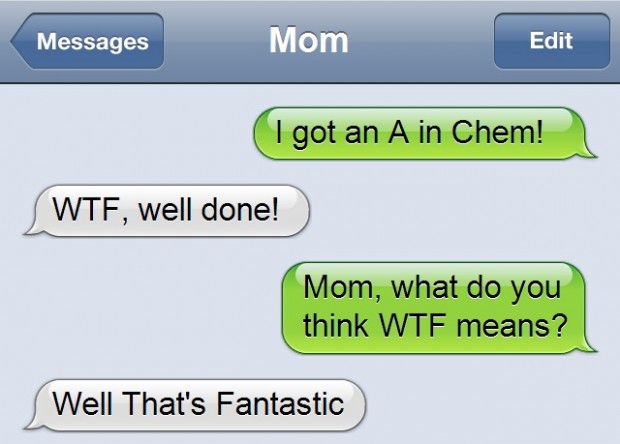
My husband subscribes to an app for funny text message “fails.” I wanted to include some of my favorites on this post because I think they show how the digital reconstruction of the written word can make for interesting dialogues. They just happen to all be from moms  J  


Friday, October 17, 2014

Investiture

As I read the chapters in Hicks’s Crafting Digital Writing; Composing texts across mediums and genres  and Gura’s  Teaching Literacy in the Digital Age; Inspiration for all levels and literacies, my mind continued to revert to the word digital. Digits make me think of math and numbers, not written expression and literacy. So why is literacy outside of the printed realm called digital? The more I thought about this I realized it is all a code; just like learning the alphabetic principal and breaking the code in reading. Students always have to find ways to decipher language as commentary. How they formulate that understanding can vary from printed text, to audio files, or moving imagery, but the ultimate goal is for students to not only investigate but also invest.

A major problem I have witnessed with some of my middle schoolers is a lack of interest in school.  They are trending towards losing motivation to try, and it breaks my heart.  While not only rooted in reading, I do believe that many of these students disinterest comes from the constraints or struggles they have encountered with the printed word.  Either reading was hard to learn or writing “just wasn’t my thing.” Literacy became disjointed at some point.  But, there are “tremendous literacy and life learning opportunities possible through the production of original student media products” (Gura, 2014, p. 185).  Through the use of audio and video, we can tap into students interests as well as teach them how to craft products of expression.  A news broadcast invests students in local affairs in conjunctions with their analysis (Gura, 2014, p. 192).  Production and product are as valued as content creation (Hicks, 2013, p. 96).  These outlets provide occasions for “students [to] be conscious of their writing and thinking” while developing critical means of composition in a way that capitalizes on an investment in the craft (Hicks, 2013, p. 136). 

The following are the major themes that made me invest in incorporating more multimodal forms of expression in my classroom –

·      Audio texts composed in small segments allow students to take risks without the fear of messing the whole piece up.  Through editing and revision students can play around with what works and what doesn’t (Hicks, 2013, p. 98). For me this is analogous to copy and pasting in a word processor. 
·      Crafting audio texts encourages prosody and fluency (Hicks, 2013, p. 91).  Students have to be aware of how they say something.  Translate that into the written word – students have to be thoughtful when composing an email. How will the reader take it?
·      We live in a world where images speak louder than words (Hicks, 2013, p. 104).  Therefore, students, who are already invested in social media, can use pictures and videos to craft a “concise message that critiques an existing” thought, idea, theme, or preconceived notion (Hicks, 2013, 107).
·      Developing video texts can be messy in the same way developing a piece of written expression. But students can practice achieving the same goal, a well-defined, connected texts, in a medium that speaks to their generation (Hicks, 2013, p. 115).


As for a mentor text, I am in love with this 90 second short.  The website http://jameskennedy.com/90-second-newbery/ invites students to create a  video that tells the entire story of a Newberry book.  The one that stuck out to me was about Charlotte's Web.  


I chose this as a strong mentor text because I feel that it decorates the original text, illustrates a concept and illuminates the viewer on media elements (Hicks, 2013, p. 110).  The costumes and setting used bring the book to life.  The act of summarizing a text is a hard concept for many students let alone in 90 seconds.  But, my favorite thing, is the use of cartoons, humans and the song.  Those elements incorporate the tenants of a strong transformative video text, audio text, and elements critical for written text. 


Sunday, October 5, 2014

Visual Perception

"The really cool advance with functional imaging happened when scientists figured out how to make pictures that show not just anatomy but activity where neurons are firing."
-Nancy Kanwisher


In her Ted Talk, Nancy Kanwisher talks about the ability to use functional MRI scans to see internal anatomy.  These brain images allow doctors to determine activity through pictures.  Kanwisher used scans of her own brain to drive her research about the brain's ability to recognize visual stimulus like faces and objects. She proved that the brain has a specialized region of the brain solely for facial recognition.  This means that our brains, the thinking organ as we call it in 6th grade, has developed to include areas that are necessary when asked to identify a visual prompt.  

Not only was her talk highly interesting, but a great example of a multimodal presentation. She used pictures videos, interactive diagrams, audio clips, but no printed text.  "A good presentation is the result of a great deal of writing that never shows up on the slides but become part of the words spoken by the writer" (Hicks, 2013, p. 67).  Kanwisher never "reads" what is written on a slide or references a page in a printed handout.  She focuses "nearly as much on [her] speaking as on the slides" (Hicks, 2013, p. 64).  The slides are used when a image is more powerful than words.  The video of a man responding to changes in the doctor's face is ten times more powerful that if she had described it.  The use of the brain diagram and the various colors used to highlight where specific functions occurred gave the audience the same lens with which she conducted her research.  However, her "judicious use of images, videos…and other effects" engaged the audience without turning them off (Hicks, 2013, p. 77).  

This visualization of data and ideas creates limitless possibilities for student expression.  "While writing is very important, such an assignment only asks students to preform one cognitive skill - summarization" (Gura, 2014, p. 34).  But the world our students live in and the future that they will direct requires more than summary.  It will require critical thinkers to solve global issues and understanding of concepts yet to be created.  Therefore, while in school, we can provide students the opportunity to relate and present information in ways that will develop these skills.  "The 20-Shot Short Story" asks students to analyze literacy through "the language of film, gesture color and material" (Gura, 2014, p. 37).  Students are given a chance to create images that transfer the literary features from print to text.  This meaningful application extends learning not regurgitation (Gura, 2014, p. 40). In similar form, moviemaking taps into the analysis as students have to plan what features are important and what needs to be left out.  (Gura, 2014, p. 44). Recently, I visited a school and sat in on a digital design class.  Students were using various online platforms to present information about key figures in the history of technology.  When asked, a student said the hardest part wasn't the iMovie platform, but deciding what was important.  I asked if she felt the same would have been true if she had been given the option to write an essay. I think her response is very telling.  Paraphrasing, "Oh no! Than creates a whole new set of problems for me because I don't think in words, but in pictures!" (Side note: She was dyslexic like Albert Einstein who stated that he saw in concepts in 3D before ever being able to put them in words!)

Creating a picture! That’s what it is about in neural science and education.