About Me

My photo
I am a 6th grade language arts teacher looking for ways to incorporate digital texts and New Literacies into my classroom. This blog will chronicle my journey and, hopefully, provide insight into what works and what doesn't.

Monday, April 20, 2015

#walkmyworld - Learning Event Ten - Denouement

Denouement
Learning Event Response - 
First, curate everything and share. The first step in completing the tenth learning event, and ultimately the #WalkMyWorld Project 2015 is to curate and share all of your content.

In the #WalkMyWorld we move teachers and students from content consumers, to content curators, to content constructors. What this means is that we want you to see the value in curating content online and sharing with others. For this learning event, we would like to suggest that you might use Storify or Diigo Outliner. You may also post this curated content to your website or blog.

Storify is a free tool that can be used to create stories using social media elements. To learn more about Storify, I recommend reviewing this tutorial put together by one of our organizers Greg McVerry. Diigo is a free social media highlighter. You can use Diigo Outliner to collect, curate, and share links. We will share more tutorials on tools to use in curating content over the coming week on the #WalkMyWorld hashtag.

In the work that you curate and share, you should include content you shared in #WalkMyWorld 2015. You are self-selecting and curating the content you want to highlight. As you include content in your curated content, please include reflections in the story. You can add in text blocks between the shared tweets and blog posts. Please use these spaces to reflect on shared content. When you have finished, please share this out to the #WalkMyWorld hashtag.


Second, complete the participant survey. As detailed throughout the project, this is not only an open learning experience, it is also an open research initiative. Collectively, we are trying to identify best practices associated with open, hybrid pedagogy. To that end, we'd like to know about your experiences in the project. 

Please complete the following participant survey by clicking here, or reviewing the survey to the right.

This research is being conducted, and reported, in the public. As a result, we want to make our intentions and data public. To review the results of this survey, please click here.

The first question asks you to share the link to the curated content piece you created for this learning event. Please share that link in the survey. The remaining questions ask about your thoughts, feelings, and some demographic questions. This data will be used by the organizers to improve the project and future activities for instruction in K through higher education.


Third, apply for a digital badge. After you have completed and shared your curated content piece and the participant survey, you can apply for a digital badge on P2PU to show the world that you have completed the #WalkMyWorld Project 2015.

Digital badges are visual symbols of accomplishment that contain detailed claims about learning, links to evidence of learning, and they're shareable over the web. To learn more about digital badges, please click here. 

To apply for the #WalkMyWorld 2015 participant badge, click here. You will need to submit the URL for your curated content piece and reflect on the process and product involved. Once you have submitted your pledge for the badge, it will be reviewed by one of our organizers, Ian O'Byrne (@wiobyrne).  You will be awarded the badge, or given feedback on how to revise. 

After being awarded the badge, please feel free to post and share your badge to the #WalkMyWorld hashtag. Thanks again for sharing and learning with us.

My Response - 
First, I curated my experience with Storify. 
https://storify.com/jhcalamari/curating-walkmyworld

Second, I completed the survey.

Third, I applied on P2PU for my I walked digital badge....stay tuned to see if it is awarded!


Thursday, April 16, 2015

#walkmyworld - Learning Event Nine - The Story of Us

The Story of Us
Learning Event Response - 
Watch the following video from WNYC Radio Rookies. 

Print out and follow the storytelling and recording tips if needed.


Brainstorm possible ideas or topics for your Story of Us. What do you have a unique perspective on? Is there a social problem you would like to see addressed in a story? What sides of a story are often ignored? What is a story that people don't know about, but should? What is something you are very curious about and want to know more? 


Are you concerned with the way that gender is viewed online and in our classrooms? 

Are you concerned with high-stakes testing in schools? Do you work to find better ways to embed STEM into all aspects of teaching and learning? Do you wonder about privacy and security in online spaces? All of these are possible starting points. What do you have a unique perspective on? 


Use digital tools to create and share your Story of Us. A good Story of Us has three parts:

  • Me. Start with a story about who you are. This helps your audience understand your perspective and establishes your voice in the story. Focus on an event, or challenge in your life. You have have had multiple opportunities to share aspects of your identity in the #WalkMyWorld Project. You may decide to take one of your earlier shared pieces and build off of that.
  • Us. After you start with your story, bridge your personal perspective out to connect with the audience. Explain why your point of view is relevant to the other members of our community. What challenges and opportunities might others encounter if they're presented with the same obstacles or decisions? What choices do we have in response to these challenges? Might we have the opportunity to live and learn together? What might this future look like?
  • Now. A good story ends with a call to action. You want our audience to know they can take action...and what that action should be. Present the opportunities we all have for enacting change. Do you want to connect with others and continue to work and share in the future? Present concrete steps about what could and should be done next. 
Record, reflect and share your Story of Us on the #WalkMyWorld hashtag. You might also chose to include the #teachtheweb hashtag now that you're a webmaker. As you create and share, you should consider the tools you'll use to record and share your story. You might use Soundcloud, YouTube, or Google Drive to save and share your files. 

My Response - 
As I thought about my perspective and an identity I wanted to expand on, I couldn't help but go back to my initial introduction to #walkmyworld.  I teach dyslexic students and their story is what I am concerned with.  So I used Bitstrip to create an avatar and the following comic to tell "The Story of Us."  This was a completely new experience for me, but it was actually really enjoyable and pretty easy digital tool to use. I hope to use this with my students so they can express themselves in a digitally, creative, visual way!  


Monday, April 6, 2015

#walkmyworld - Learning Event Six - I Dream


I Dream
Learning Event Response - 
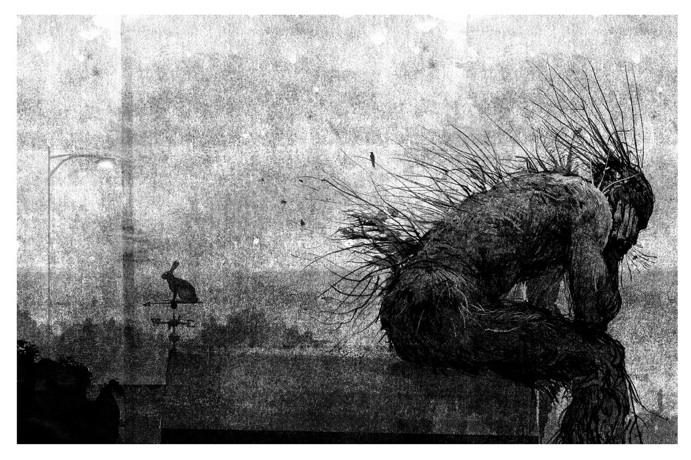
A-Monster-Calls-Illustration.jpgReview the image to the right from A Monster Calls by Patrick Ness, illustrations by Jim Kay. The fantasy novel details the tribulations of a 13 year old boy (Connor) that has nightmares when an ancient yew tree visits and shares stories with Connor. The image to the right shares a moment while the yew tree, portrayed as a monster waits for Connor to come out and fin
d him.


After you review the image, watch the video American Shokunin by Ryan Bush. The video details the work, art, and philosophy of Ryan Neil.

Consider the imagery in the illustration and the video. What common threads are present between the two texts? What beliefs do the authors of these texts share about our dreams and possibly our nightmares? What do the authors believe is the purpose of our dreams? What can we possibly do with our dreams if given the opportunity? What becomes of a dream deferred and allowed to dry up? Are you allowed to follow your dreams...or are they dictated by another?

Play, create, and share an image or video of a dream that you have had and provide a subtext for that dream. You might choose to capture a photo or video. You might choose to paint or illustrate an image using an online or offline tool. You could use iPiccy which is a great simple online photo editing tool or Thinglink which is another image tool that allows links etc to be embedded into your image. You might even choose to add an audio soundscape to your work.

My Response - 

When thinking about dreams and imagery, I couldn't help but think about the surrealist work of Salvador Dali.  Somewhere between reality and a dream state, his work always seem illogical to me.  His painting style was clean with crisp lines, unlike the Impressionists, but the topics were imaginative.  Like the painter himself, the art feel eccentric. 

Dreams fall into the same category for me.  They are eccentric and deviate from my "typical." Just as Jim Kay's illustration of A Monster Calls, there is a sense of normality but something is a kilter. Upon closer inspection, the yew tree monster doesn't feel scary or intimidating but sad, very unmonster-like. But as Ryan Bush says in the video American Shokunin "the scars that look very artificial when first created begin to look very natural as they weather and age." Our dreams may feel artificial but there is something very real about who we see when we close our eyes and allow our imagination space to cultivate. 

The faces in our dreams are those of someone we have encountered in our lives.  Our imagination does not invent a new visage, but uses ones already logged in our memory.  But, I can never remember the exact face I dream of or who it belongs to.  I usually remember what happened in the dream, but can never quite place who was involved. This doesn't matter in the long run because I believe every dream leads you to a better version of yourself, wither by pointing out flaws you won't admit to during the day or illuminating a path maybe unconsidered.  

Below is a VoiceThread I created summarizing my recent dreams. The clay faces are made by students at my school and are displayed in an outdoor courtyard.  I often find myself wondering about the student that created each face.