
You are what you like (Frontline, 2014). And what you like, and the more you like it,
becomes part of the current culture.
This culture provides students with a sense of empowerment where their
voices count and no one tells them, “You can’t say that” (Frontline,
2014). Students can touch on taboos of
our day in a critical way that gets people listening. This is why social media like Facebook and
YouTube appeal to children and teens (Hobbs, 2011, p. 130). Social media and the Internet provides a
place where students construct the world in which they want to live and be a
member of.
Tweets and online expressions cerate data that identifies
you as the user, which is valuable because producers and audiences are mutually
dependent on each other (Frontline, 2014 &Hobbs, 2011, p. 135). By constructing a profile, a student is
generating interactions between themselves and the world. They are responding critically to what are
viewing, reading and liking. Social
media, as digital writing, is focused “on amusement or centered on building
relationships” (Hicks, 2014, p. 140). As
teachers, we can harness this to help students develop reasoning skills and
reflect on decision-making skills, all while students are articulating themselves
in a constructed but not fabricated way (Hobbs, 2011, p. 136).
“Simply reading a single tweet or even a series of tweets
isn’t nearly as important as a conversation” (Hicks, 2013, p. 137). A digital conversation on Facebook, Twitter
or an educational platform like Edmodo documents the construction of thoughts
and ideas
by our students. We
can watch their brains work as they read and respond to each other. Those responses don’t have to be long winded
or streams of consciousness (like some blogs I have read). The possibilities are endless as children
analyze, discern, inform and participate in digital writing (Hicks, 2014, p.
144). Short comments or brief tweets
build upon each other and accumulate into rhetoric that seamlessly blends into
digital texts.
“Depending on what youth aim to do online…they are
constructing identities, building (or destroying) relationships, creating new
opportunities for learning, and remixing various digital media” (Hicks, 2014,
p.139). We are not telling students what
to do anymore; they are not waiting to be directed or guided into paths chosen
for them. They are out there creating
and generating worlds in which they rely on each other to get ahead (Frontline,
2014). How amazing! Students from the
Generation of Like will not ask what can be done for them, but instead, will
craft a world where their thoughts, feelings and ideas are original and
distinctive.
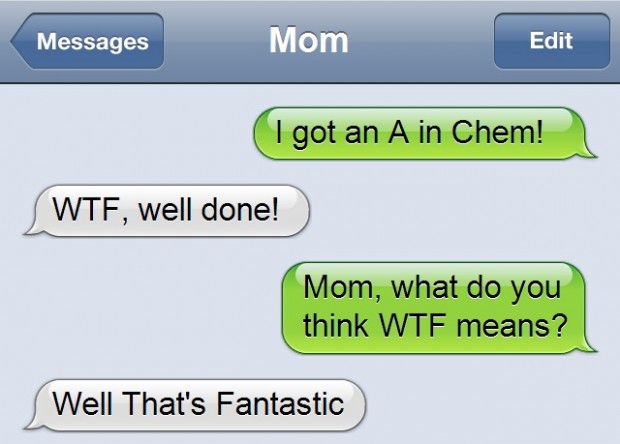
My husband subscribes to an app for funny text message “fails.”
I wanted to include some of my favorites on this post because I think they show
how the digital reconstruction of the written word can make for interesting dialogues. They just happen to all be from moms J




Hi Josie,
ReplyDeleteYour quotation from Hicks “Simply reading a single tweet or even a series of tweets isn’t nearly as important as a conversation”, also stuck out to me too. It reminds us that our students not only need to learn how to be consumers of the digital world, but also critical, wise, and thoughtful producers in the digital world. Allowing opportunities for this type of writing in our classroom is the way that we can ensure that they are learning how to do be these kinds of producers. In so many ways, students can learn how to successfully communicate with others through a digital conversation. Allowing our students to tweet with our support, for example, is one such way that they can be important members of digital conversations.
By the way, thanks for including the funny text message “fails”. They gave me a good laugh!
Those pictures are hilarious! My students struggle with spelling and word choice from "text talk" and trusting auto correct all the time! It's always interested me how many of my friends in different careers are urged (and sometimes obligated) to have an online identity. I know our school district encouraged teachers and schools to Tweet the positive things happening in our classrooms for the public to see (even though I seriously doubt anyone is paying attention outside of teachers in the district), but I can see their point. Online identities help outsides get an idea of who you are and what you offer before ever meeting you. It's like social media has become a new marketing tool.
ReplyDelete"This culture provides students with a sense of empowerment where their voices count and no one tells them, “You can’t say that” (Frontline, 2014)." This quote is absolutely right! Here's the rub though....while no one tells them on social media "You can't say that", there still are students who are absolutely reaping the consequences of the things they say and post on social media through ended friendships, upset parents, and even legal action because of threats they have posted. The idea that our students can post whatever they want is absurd because there are always consequences that will catch up sooner or later. That is why it is so critical for students to be taught good judgement and how to critically think about not only the things that they research but the things that they post.
ReplyDeleteIf we can teach our students how to think before they post, we can open up their minds to just how powerful the internet can truly be. The internet can be an incredible force for good if used in the right hands. It can be a place for digital literacy to transpire, for research to take place, for virtual field trips to be experienced, and so much more. But in the wrong hands it can expose students to pornography, be a place where online bullying takes place, and can also provide students with a false sense of security. That is why we must be diligent in how we teach our students to handle the internet responsibly as well as critically think about the things they take in. It's a hard task, but one that if done well can truly teach our students.
The lack of censorship when it comes to social media seems to be an issue when it comes to the mis use of technology and social media. I see that too often not only with young people but also with college and young adult ages.
ReplyDeleteThe way in which we teach students in our own classes to appropriately use social media and other digital resources by way of curriculum, certainly can increase the way in which social media is viewed by students. It is a source of building relationships as well as destroying relationships if used in a harmful ego centric way. Do students really understand that when they post something it can’t be taken back. Just like an email, once you hit send it is there to stay. Educators that can instill in their students the impact that social media has on their current and future plans can help them in the long run to be better citizens.
And a side note…I just love the text messages included in this blog! So funny and I feel that way sometimes not knowing what some of the acronyms mean.